TLDR: If you are deciding whether on lawn aeration this fall and when to schedule it, the short answer for lower Cape May County is late August through early October. Fall lawn aeration in zone 7b lines up with the recovery window for cool-season grasses, when the turf is rooting actively and can heal the holes quickly. The controlling factor is not the date on the calendar but how the soil is behaving as the season cools. This guide covers the window, how sandy coastal soil changes the timing and technique, the pre-aeration setup that makes the job work, and the mistakes that cost homeowners here a good result.
Why fall timing matters for lawn aeration in USDA zone 7b
Core aeration is the mechanical removal of small soil plugs from a lawn to relieve compaction and improve air, water, and root movement. On the sandy and sandy-loam soils common across lower Cape May County, surface compaction limits root depth. For cool-season lawns in zone 7b, late summer to early fall is the recovery window, the stretch when the grass can take the work and bounce back fast.
Fall earns its place as the primary window because of how cool-season grasses behave in this climate. Through the heat of summer they conserve energy. As the air and soil cool heading into fall, the fescues, ryegrass, and bluegrass mixes that grow here shift into active root development, and that is exactly when aeration pays off most. The holes you open get colonized by new root growth instead of sitting empty. Spring aeration, by contrast, is often the wrong call for cool-season lawns in zone 7b, because the soil is still cold and slow early in the season and the timing competes with other spring stresses. Rutgers Cooperative Extension guidance on cool-season turf management supports working with this fall recovery window rather than against it. The lawn aeration service page covers the full scope of the work.
The optimal aeration window for cool-season grasses in lower Cape May County
The target window in lower Cape May County is late August through early October. Inside that range, the soil condition matters more than the specific date. As soil temperatures cool through late summer and into fall, cool-season roots move into their active recovery phase, and that is the signal that the lawn is ready to heal aeration holes quickly rather than slowly. Lower Cape May County sits in USDA zone 7b, which sets the cool-season growing pattern this window follows.
This is why we schedule around how the season is actually progressing, not a fixed calendar slot. A warm, dry late summer and a cool, moist one do not put the lawn in the same place on the same week. The window has a back end too: push aeration too late into October, when the soil has cooled past the active recovery point, and the lawn does not have enough growing time left to close the holes and root into them before it heads toward dormancy. Year-round lawns in North Cape May, where established cool-season turf is the norm and homeowners notice turf quality, are exactly the kind of property where hitting the window cleanly shows in the result. For lawns carrying heavy compaction, the soil compaction relief detail page explains what core aeration does at the root zone.
How sandy coastal soil affects aeration timing and technique
Sandy and sandy-loam soils in lower Cape May County compact differently than the clay-loam soils of inland New Jersey, and that changes both when aeration helps and how the cores behave. Sandy soil drains fast, which means it can dry out around the aeration plugs faster than a heavier soil would, so soil moisture at the time of the job matters.
Near the bayfront, in stretches like Erma and the bayside low ground, the high water table shapes the compaction profile, which often runs shallow but dense right at the surface where foot traffic and equipment pack the top few inches. Core aeration that pulls genuine plugs, rather than a tool that only punches holes, is what relieves that surface compaction and opens real channels for air and water. Penetration depth and clean plug removal are the markers of the job being done right on this ground. The point of the work is mechanical: reopen the soil so air, water, and roots move freely again. The thatch breakdown page covers how aeration also helps a heavy thatch layer break down over time.
Core aeration versus liquid aeration
Homeowners researching aeration run into two very different things sold under similar names. Core aeration is the mechanical method described throughout this guide: a machine pulls small plugs of soil out of the lawn, physically opening channels through a compacted surface. Liquid aeration refers to soil-conditioning products sprayed on a lawn that are marketed to loosen soil over time. The two are not interchangeable, and the difference matters most on exactly the kind of ground found here.
On compacted sandy and sandy-loam soil with a dense top layer from foot traffic and equipment, the problem is physical. The surface is packed and roots cannot push through it. Mechanical core removal addresses that directly by taking material out and leaving open holes the roots colonize. We do core aeration for that reason. It is the method that produces the visible plugs and the real channels, and on this ground it is what actually relieves the compaction you can feel underfoot. If a lawn is genuinely compacted, pulling cores is the work that reopens it, which is why our aeration is mechanical from start to finish. A product sprayed on the surface cannot remove the packed material that is blocking the roots, and on this ground that physical removal is the entire point of the job.
Salt spray and turf stress before fall aeration
Lawns here carry a stress that inland lawns do not: a full summer of salt-laden onshore wind. By late August, turf on exposed lots has absorbed months of that exposure, and it enters the fall window already under physiological stress. Aeration at the right time helps, because reopening the soil supports the gas exchange and water infiltration that a salt-affected surface can restrict.
The exposure is not uniform across the service area. Properties on Diamond Beach and the oceanward margins take more direct salt-laden wind than a more sheltered inland lot in Erma, and that difference shows up in how stressed the turf is heading into fall. A lawn that has taken the harder salt exposure benefits from having its soil reopened at the point in the season when it can actually use the recovery. Reading that exposure, and timing the work to it, is part of doing the job well on a coastal property rather than treating every lawn as if it sits in a sheltered inland yard.
Pre-aeration mowing setup: height and timing
The pre-aeration mowing setup is the short, clean cut made a day or two before aeration. Cutting slightly below the regular height, no lower than about two and a half inches for cool-season blends, lets the aerator cores penetrate cleanly and helps the plugs break down faster afterward. It is a small step that materially changes the result.
The logic is straightforward. Shorter turf gives the aerator clean access to the soil surface, so the tines pull consistent plugs rather than catching on long blades. It also speeds plug breakdown once the cores are on the surface. Do not scalp the lawn to achieve this, a hard cut right before aeration stacks two stresses on the turf at once. If the thatch is heavy, removing clippings before the appointment helps the cores reach soil. Rutgers Cooperative Extension fact sheet FS102, Your Lawn and Its Care, sets the working mowing-height ranges for New Jersey cool-season lawns, and the pre-aeration cut works from the lower end of that band. Keeping the weekly lawn mowing consistent through the season makes this final cut a small adjustment rather than a rescue.
What happens after aeration: the recovery window
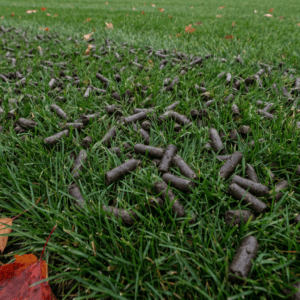
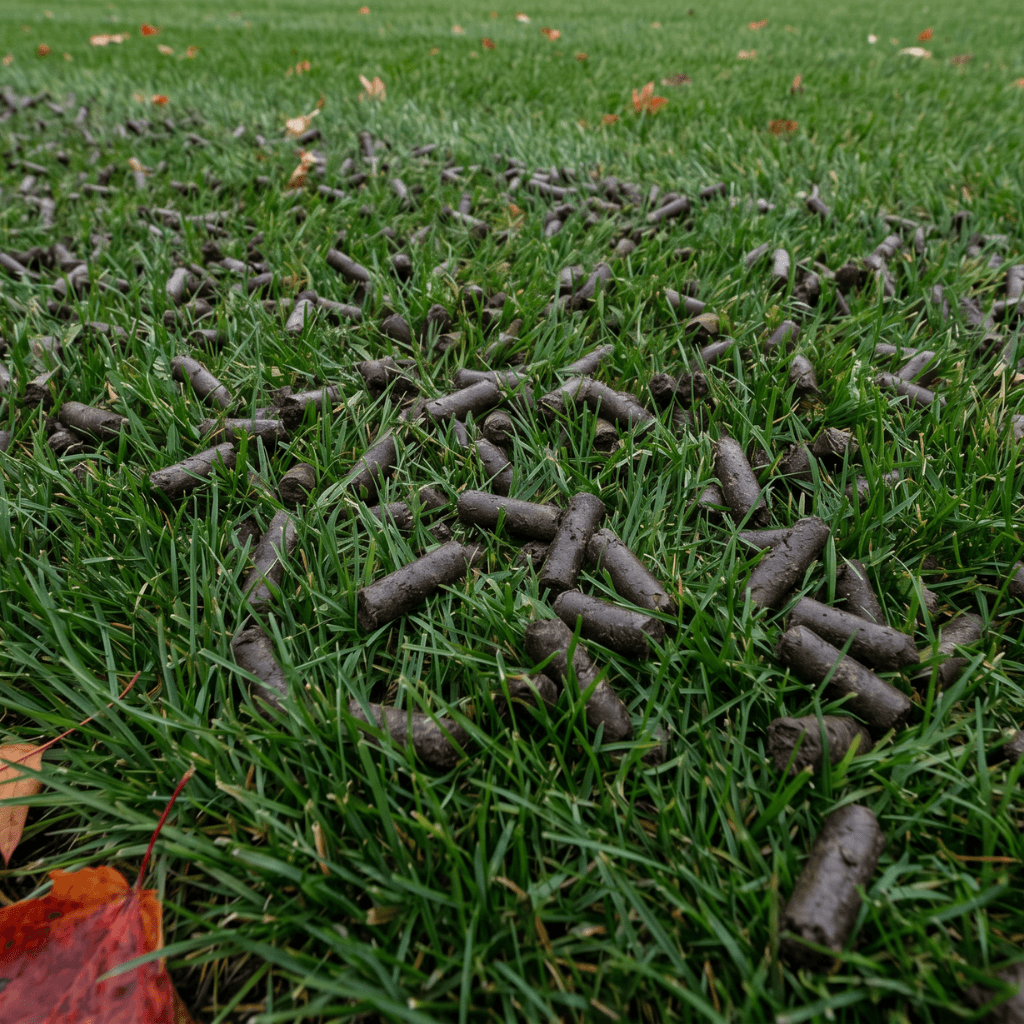
After aeration, the plugs are left on the surface to break down, and on sandy coastal soil that breakdown tends to run faster than it would on heavier clay. Over the following couple of weeks, the cores crumble and work back into the holes, and the lawn shifts into using the reopened soil.
Expect some color change in the days right after the work as the turf responds, which is normal. Keeping the soil from drying out hard during the recovery period helps the lawn capitalize on the reopened channels, since the whole point was to improve how water moves into the root zone. The recovery is the lawn’s own natural process. Aeration does not force growth, it removes the physical barrier that compaction put in the way, and the turf does the rest when the timing is right. Holding off on heavy foot traffic over the freshly aerated lawn for a short stretch lets the recovery proceed without re-compacting the surface you just opened. The whole-lawn core aeration page covers how a full-property aeration is handled start to finish.
Caring for your lawn after aeration: watering, traffic, and safety
What you do in the two to three weeks after aeration shapes how much the lawn gains from it. Watering is the main lever. On fast-draining sandy soil, the reopened channels move water down to the root zone efficiently, so keeping the soil from drying out hard during recovery helps the turf use what you just opened. That usually means lighter, more frequent watering on sandy ground rather than one heavy soak that drains straight through, with the goal of steady moisture while the cores break down.
Foot traffic is the other lever, in reverse. Easing off heavy traffic over the freshly aerated lawn for a short stretch keeps you from re-compacting the surface you paid to open. There is no safety concern with the cores themselves. The plugs left on the surface are just soil and crumble back into the lawn within a couple of weeks, so the lawn is safe for children and pets right after the work. The only real ask is to go easy on the heavily used paths while the surface settles. None of this is complicated, but doing it is the difference between aeration that pays off and aeration that mostly just made holes.
Ready to get on the fall schedule? Call 856-386-4600 for a no-pressure walkthrough.
Aeration timing mistakes that cost lower Cape May County homeowners
Most aeration disappointments trace back to timing and conditions, not the machine. Knowing the common mistakes helps you schedule the work when it will actually deliver.
- Aerating too late in October, after the soil has cooled past the active recovery point, so the lawn cannot close the holes before dormancy.
- Aerating in drought on bone-dry soil, where the cores come out fractured and shallow instead of clean and deep.
- Aerating compacted sandy soil that has baked dry all summer without any moisture in it, which makes clean penetration nearly impossible.
- Using a solid-tine or spike device instead of a hollow-core machine, which presses the soil down rather than pulling plugs out, compacting the very ground you meant to relieve.
The thread running through all four is that aeration rewards the right conditions and punishes the wrong ones. We schedule around soil condition and the cool-season recovery window precisely to avoid these traps, rather than running a machine over a lawn on whatever day is open.
How often a coastal lawn needs aeration
Aeration frequency depends on how fast a given lawn re-compacts, and that varies more here than a one-size schedule admits. The drivers are foot traffic, soil type, and use. A lawn that takes heavy use, kids, pets, parking, or a regular path worn across it, packs back down faster and may benefit from aeration every fall. A lightly used lawn on loose, well-drained sandy soil may only need it every second or third year.
Soil works in your favor on much of this ground. Sandy and sandy-loam soils do not seal up the way heavy clay does, so a lawn here often re-compacts more slowly than an inland clay lot would, at least below the trafficked surface layer. The honest answer is to read the lawn rather than the calendar. If the surface feels hard underfoot, water runs off instead of soaking in, or the turf is thinning in the most-walked areas, those are the signals that compaction has returned. We assess that on the walkthrough and recommend a cadence to match the lawn in front of us, not a blanket annual sell. Penn State Extension makes the same point on pulling full-length cores only when soil moisture is right, neither bone-dry nor saturated.
When to skip fall aeration altogether
Aeration is not an annual ritual every lawn needs. Knowing when to skip it is as much a sign of a competent crew as knowing when to do it, and it saves you a service the lawn would not benefit from.
A lawn growing on loose, well-drained sandy soil that gets light foot traffic may simply not be compacted enough to warrant it in a given year. When we know a lawn was recently established, we hold off as well, because in our experience young turf that is still knitting in does better left undisturbed than opened up with a coring machine. A lawn going into a drought-stressed, bone-dry fall is better left until conditions improve than aerated into hard ground where the cores fracture. The honest read is condition-based: if the soil is not compacted and the lawn is rooting well, the right call may be to wait a year. We tell homeowners that rather than selling a service the property does not need, because the point is a healthy lawn, not a line item.
What fall lawn aeration with Boyes looks like in North Cape May and nearby towns
We set the fall aeration schedule around the lawn’s recovery window and soil condition, not calendar pressure. Before the appointment we assess the property, the soil, the compaction pattern, and the turf condition, so the work is timed to do the most good. A heavily trafficked lawn and a lightly used one do not have the same need or the same timing.
On the day, the crew pulls genuine cores across the lawn, leaves the plugs to break down, and walks you through what to expect over the following weeks. In the two to three weeks after, you see the cores crumble and the turf settle into the reopened soil. The work is owner-led, so the crew that assessed the property is the crew doing the job, and the standard is consistent, clean plug removal across the lawn. We run this in North Cape May, in the bayside neighborhoods of Erma, on the second-home lots of Diamond Beach where owners are often not present during the window, and across the year-round lawns of Cape May. No inflated promises, no guarantees we cannot stand behind, just aeration timed to when your cool-season lawn can use it.
Pricing your fall lawn work? Call 856-386-4600 before you book with anyone else, or request a free estimate today.