
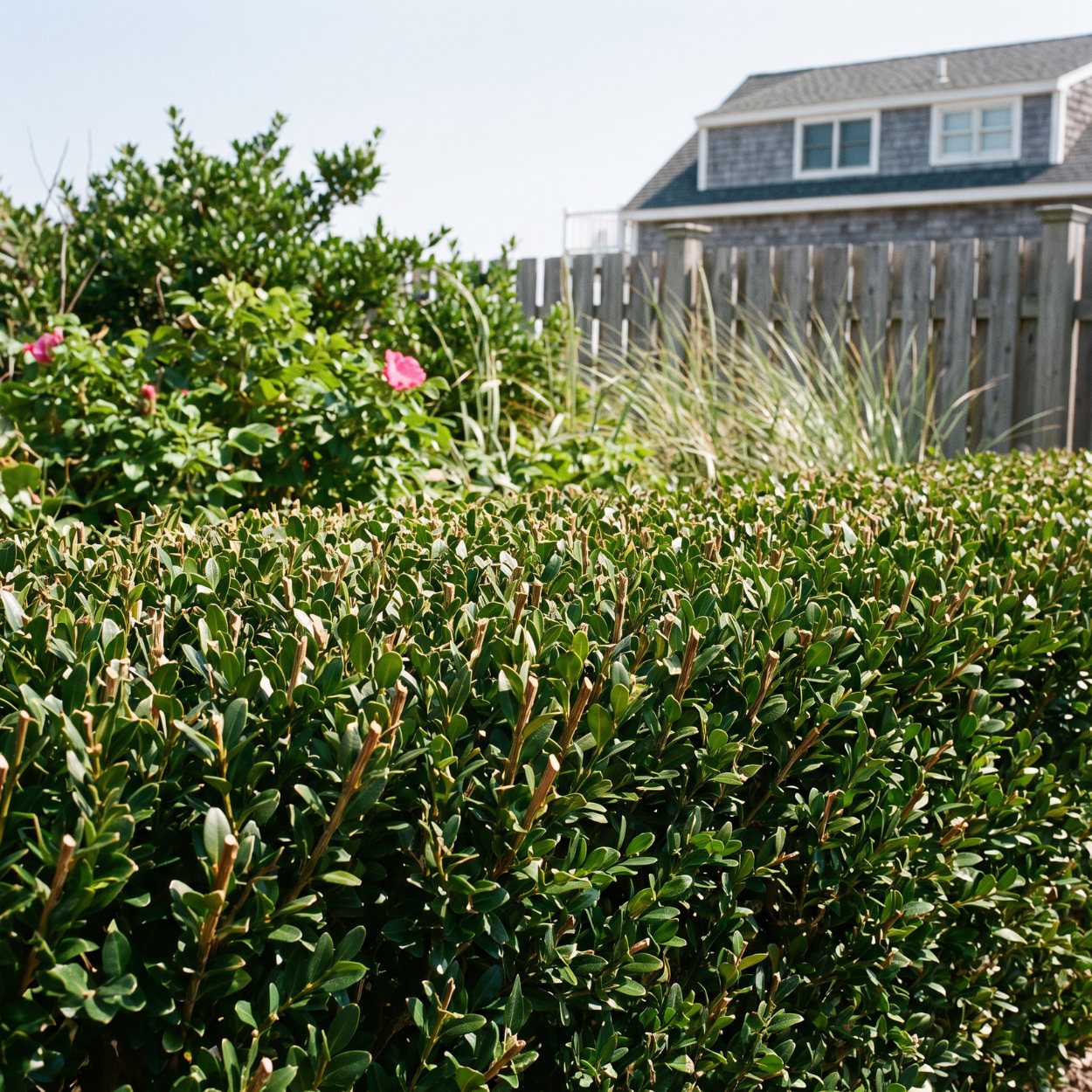
TLDR: A coastal hedge schedule is set by species, not by the calendar alone. Fast growers like privet take two to three cuts across the season, holly and boxwood usually take one main cut plus a light touch up, and arborvitae takes a single careful pass into green growth only. The final shaping cut of the year belongs in late summer, well ahead of the first hard freeze, because a late cut pushes soft new growth that cannot harden in time. On exposed lots near the water, that unhardened growth is exactly what winter wind and salt spray burn first.
A hedge trimming schedule is a written plan that assigns every hedge on a property its own cut count, its own window in the season, and its own finishing date. It is built around growth rate, flowering habit, exposure to wind and salt, and how hard each plant can be cut before it stops filling back in.
What Does a Coastal Hedge Trimming Schedule Have to Account For?
A schedule on the shore is really three schedules stacked on top of each other: the growth schedule of the plant, the weather schedule of the site, and the use schedule of the property.
Growth rate sets the number of cuts. A privet hedge can push a foot of new growth in a single flush, while a boxwood beside it might add three or four inches all year. Shearing both every time a crew is on site is how the boxwood goes thin and the privet still looks shaggy by August.
Exposure sets the intensity. On an open lot near the water, wind and salt spray do a slow, uneven trimming of their own, burning the windward face and pushing the plant’s energy to the protected side. The schedule has to leave enough foliage on that exposed face to absorb the damage, which means cutting lighter on the water side than on the sheltered side of the same hedge.
Property use sets the visit windows. A year round home can be trimmed whenever the plant is ready. A second home or a summer rental has a narrower set of openings: before the season starts, mid season when the property turns over between guests, and after the crowds thin out. Real scheduled hedge maintenance works around those windows rather than fighting them.
How Often Should Each Hedge Species Be Trimmed?
Four plants make up most of the hedge lines in lower Cape May County: privet, holly, boxwood, and arborvitae. Each wants a different cadence, and the differences are large enough that one blanket rotation will slowly damage at least two of them. Our approach to plant type timing starts from what each species does after a cut.
How often does privet need trimming?
Privet is the fastest thing in most hedge lines here, and it usually sets the rhythm for the whole property. Plan on two cuts in a normal season, and three where the hedge is formal, squared, and visible from the street.
The first cut goes in after the spring flush has extended and firmed up, not while the new shoots are still soft and pale. A cut into soft growth holds a clean line for about ten days and then goes ragged, because the plant answers a soft cut with another soft push.
The second cut lands in midsummer, once that regrowth has run its course. On formal hedges, a third and lighter pass tightens the faces before the season closes out.
Privet also takes hard cutting better than almost anything else you will find in a Cape May Point hedge line. When a screen has outgrown its space entirely, the reset is a hard cutback while the plant is still dormant in late winter, followed by a full season of shaping to rebuild the face. That is a renovation, not a maintenance visit, and it belongs under hedge shaping work with its own timeline.
When should holly be trimmed?
Holly moves at a fraction of privet’s pace, so it rarely earns more than one real cut a year plus a light touch up on stray leaders.
The main cut goes in after the spring flush has hardened. Holly holds a shape well once you set it, and the most common mistake we see is a holly sheared on the same rotation as the privet next to it. Over a few seasons that strips the plant back to bare interior wood and cut stubs, and holly is slow to cover that back over.
Timing matters for the berries. Female hollies set fruit from spring flowers, so a heavy cut taken after flowering removes the berry display along with the growth. If the berries are part of why the plant is there, take the main cut early and keep any later work to hand pruning of individual shoots instead of a full shearing.
Holly earns its place on the beach blocks for a practical reason. In the older hedge lines around Cape May Point and West Cape May, holly is often the plant still holding a clean face on the windward side after a rough winter, while softer neighbors are rebuilding.
How much shearing does boxwood need?
Boxwood is the slowest of the four and the most easily ruined by over shearing. One shearing per year, after the spring flush hardens, is the baseline, with an optional light touch up on tightly formal shapes.
The more valuable work on boxwood is not shearing at all. It is thinning: reaching into the plant and removing a portion of the small interior branches so light and air reach the middle of the shrub. A boxwood that is only ever sheared builds a dense outer shell, hollows out inside, and traps moisture in the canopy through humid stretches.
Skip shearing during the hottest, most humid weeks. Fresh cuts made in that window sit wet, and the plant is already under load from the heat. Late spring or early summer, then leave it alone.
Boxwood also shows coastal stress differently from the rest. Instead of a sharp burn line on the windward face, you tend to see a bronzed cast across the whole plant, which is easy to mistake for a nutrient problem and treat the wrong way.
Can arborvitae be trimmed on a schedule?
Arborvitae can be scheduled, but it is the plant where the schedule matters most, because the mistakes are permanent.
Trim only into green growth. Arborvitae does not reliably push new shoots from the old bare wood inside the plant, so a cut that reaches past the green leaves a hole that stays a hole. Once a hedge line has been cut back too far, the honest fix is replacement, not patience.
In practice that means one light pass per year in early summer, once the new growth has extended, with the blade staying in the outer few inches of green. Keep the top slightly narrower than the base so the lower branches keep receiving light. A hedge sheared straight up and down shades out its own bottom and goes bare at the ankles within a few years.
Multi stem arborvitae carries a second winter problem. Heavy wet snow spreads the stems apart, and they do not always close back up on their own. Tying the leaders loosely before winter is worth more to that plant than any trimming decision you will make on it.
When Should the Last Cut of the Year Happen?
The final shaping cut of the season should land in late summer on almost every coastal property we maintain. The rule of thumb we work to is simple: stop shearing roughly six weeks before you expect the first hard freeze, and treat anything after that as touch up by hand, not shearing.
The reason is growth behavior, not the calendar. Shearing removes the growing tips, and the plant responds by pushing replacement shoots. Those shoots emerge soft, thin walled, and full of water, and they need weeks of steady growing weather to harden off into tissue that can survive winter. Cut in September or October and you are asking the plant to produce new growth precisely when it should be shutting down and moving resources into the roots and older wood.
There is a local wrinkle worth knowing. The first hard freeze on this stretch of coast usually holds off later than it does inland, and that late warmth tempts homeowners into one more cut because the hedges are still visibly growing. The window is real, but it is not as generous as it feels, and the plant is already reading shorter days.
Finish shaping in late summer and let the fall visits handle everything else on the property. Clippings from that last cut, along with the leaf work that follows, roll into the seasonal cleanups rotation rather than requiring a trip of their own.
Why Does a Late Cut Invite Winter Damage on Exposed Coastal Sites?
Inland, a late cut is a mild mistake. On an exposed lot near the water, it is an expensive one, because three stresses land on that soft growth at the same time.
The first is cold. Lower Cape May County sits in zone 7b, and the USDA hardiness zones that number comes from are based on the average annual extreme minimum winter temperature, mapped in 10 degree Fahrenheit zones and 5 degree half zones on the current 2023 version. A milder zone rating describes the average low, not the worst night, and it is the worst night that finds unhardened tissue.
The second is wind. Winter wind moving across open water pulls moisture out of evergreen foliage all season, and roots in cold ground cannot replace it fast enough. That is the browning you see on the windward face of arborvitae and boxwood every spring. Soft late season growth has thinner tissue and loses water faster than mature growth.
The third is salt. Wind carries salt spray well inland from the beach, and it settles on foliage that has no way to shed it until rain arrives. Mature, hardened leaf surfaces shrug off a good deal of that. Tender growth from a September shearing does not.
Put those three together and the pattern is predictable: a hedge cut too late in the fall shows a scorched, thin windward face by March, then spends the next full season rebuilding instead of growing. That is a year of appearance lost to one convenient visit, and getting the annual hedge trimming sequence right is mostly about not spending it.
How Do Cape May Point and the Surrounding Shore Towns Change the Plan?
Conditions in lower Cape May County push the schedule around in ways an inland plan does not account for.
Soil comes first. Sandy soil drains fast and holds few nutrients, so hedges here recover from a cut more slowly than the same species would on richer ground. Slow recovery is an argument for fewer, better timed cuts rather than frequent light ones, which is why we resist adding visits just to fill a route.
Salt is the second factor, and it arrives two ways: airborne spray during storms, and saltwater intrusion into soil during flood events on low lying lots. Rutgers Center for Turfgrass Science addresses the soil side directly, noting that immediate remediation focuses on improving drainage and getting flood water off the site, then applying fresh water to leach residual salts below the root zone, with gypsum used as an amendment. The same Rutgers salt guidance recommends testing soluble salts and pH rather than guessing at the damage.
That matters because a hedge recovering from a salt event has no capacity for an aggressive cut. When a bed floods, the schedule pauses and the work turns to drainage, leaching, and testing before a blade comes back to the plant.
The high water table on many lots near the bay and the marsh compounds it. Roots sitting in saturated soil are already stressed, and stressed roots cannot support a heavy flush of regrowth. Hedges there do better on a lighter, more conservative cadence than the same species planted two blocks inland.
Then there is the season itself. In Cape May, West Cape May, and Diamond Beach, a large share of properties are second homes or rentals, and the hedges have to look sharp for arrival weekends without ever being cut at a time that hurts the plant. That is a scheduling problem, not a horticultural one, solved by planning the year in advance instead of reacting to a booking.
Plant selection is the long term lever. Hedges built from species that genuinely handle wind, sand, and spray need fewer corrective cuts every year, which is why a conversation about the schedule often becomes a conversation about the planting. Our guide to coastal plants covers what holds up on exposed lots here.
How Do You Build the Season Schedule Step by Step?
Building the plan takes one walk of the property and about twenty minutes of writing.
- Inventory the hedges by species. Walk the property and list every hedge line and mass, noting the species and rough size. Do not skip mixed lines; a run of privet with three hollies in it is two schedules, not one.
- Rate the exposure of each line. Mark each as exposed, partly protected, or sheltered. Exposed lines get lighter cuts and more conservative timing than sheltered lines of the same species.
- Assign a cut count to each line. Two to three for privet, one plus a touch up for holly and boxwood, one light pass for arborvitae. Write the number next to the plant, not next to the visit.
- Set the first cut after the spring flush hardens. Wait for the new growth to extend and firm up. Cutting into soft growth costs a clean line and buys a second flush you did not want.
- Place the midseason cut on the fast growers only. Privet gets it. Boxwood and arborvitae do not, and holly gets hand work instead of a shearing.
- Set the finish date and hold it. Pick a late summer date for the last shaping cut, mark it on the calendar, and treat requests after that date as hand pruning of specific problems.
- Schedule renovation work separately in late winter. Hard cutbacks on overgrown privet belong in dormancy, ahead of the season, with a full year budgeted for the plant to rebuild its face.
- Reassess after winter. Walk the hedges once the weather breaks and note what burned, what thinned, and what splayed. That walk sets the following year’s plan far better than memory does.
The plan is worth writing down for one reason: it survives a busy summer. Schedules that live in someone’s head become schedules that shear everything on whatever day the crew is on site. Where hedges are one piece of a larger design, that calendar belongs inside the property’s landscape planning rather than beside it.
Frequently Asked Questions
Can I trim my hedges in the fall?
Light hand pruning of broken or dead wood is fine at any point in the year. Full shearing in the fall is not, because it triggers soft growth that cannot harden before winter, and on exposed lots that growth burns from wind and salt. Finish shaping in late summer and leave the fall for cleanup work.
How many trims does a formal hedge need per year?
It depends on the species. A formal privet screen usually needs three cuts to hold crisp faces through a season. A formal boxwood needs one shearing plus a light touch up, and arborvitae needs one careful pass. Formality raises the standard, but it does not change how fast the plant grows.
What happens if arborvitae is cut back too far?
The bare spot stays bare. Arborvitae does not reliably regenerate from old wood inside the plant, so a cut past the green foliage leaves a permanent hole. The only real remedies are screening the gap with new planting or replacing the affected plants, which is why we keep every cut in the outer green.
Does salt spray change how often hedges need trimming?
It usually reduces how much cutting a hedge can take, not how often it needs it. Salt burned foliage on the windward face is damage the plant has to grow past, and shearing that face hard removes the healthy tissue it needs to recover. On exposed lots we cut lighter and give the windward side extra time.
Is it too late to fix an overgrown hedge?
Usually not, though the fix depends on the plant. Privet responds well to a hard cutback in late winter dormancy and rebuilds over the following season. Holly and boxwood can be reduced gradually over two or three years. Arborvitae is the exception, since it cannot be cut into bare wood and recover.
Where to Start With Your Own Hedges
The fastest improvement on most coastal properties is not a better cut, it is a better calendar, and Matthew Boyes walks the property himself to build one that matches the plants in the ground rather than a standard rotation.
Hedges past the point of routine trimming? Call Boyes at 856-386-4600 for a look.
