Tell Us About Your Commercial Hardscaping Project
Send us the basics on the property and the work you need, and we’ll set up a site visit to scope it and get you an estimate.
What's Included in Commercial Hardscaping
On a commercial property, the driveway and entrance take the most abuse and do the most to set the tone, so that’s where we lead.
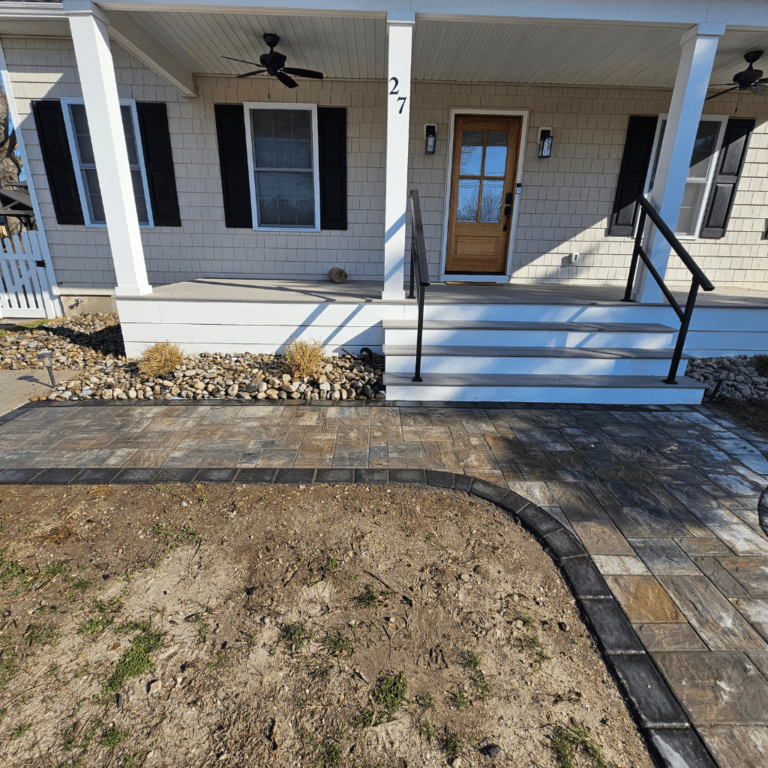
A paver or gravel driveway built on a base sized for the loads it carries, framed in Belgian block, holds up under constant traffic and turning instead of rutting or needing patches every season.
The rest of our commercial hardscaping works the same way: gravel for service drives and overflow areas, and decorative stone for islands and beds that have to stay clean with minimal upkeep. It’s all part of our wider hardscaping services across lower Cape May County.
Hardscaping We Offer
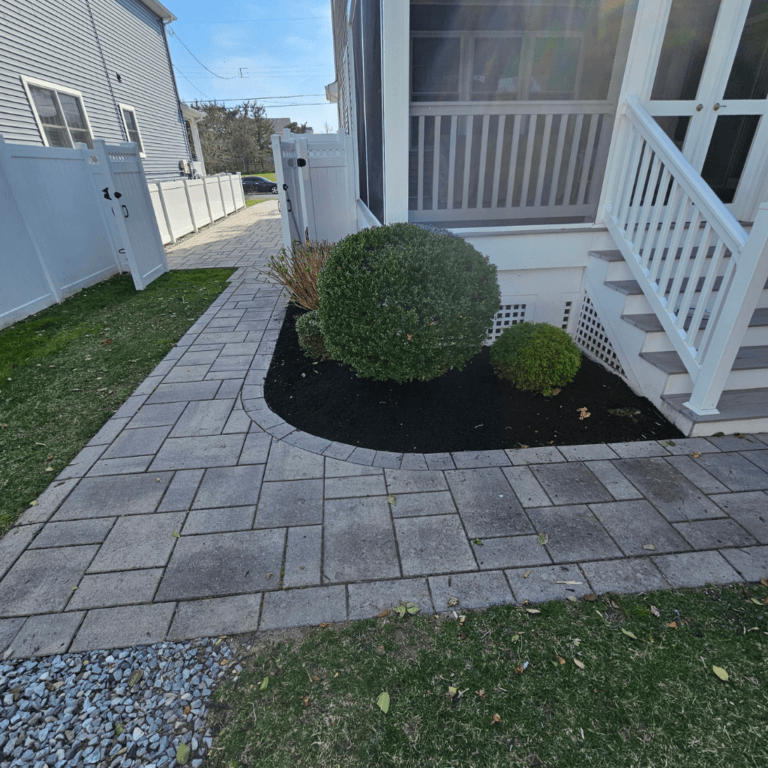
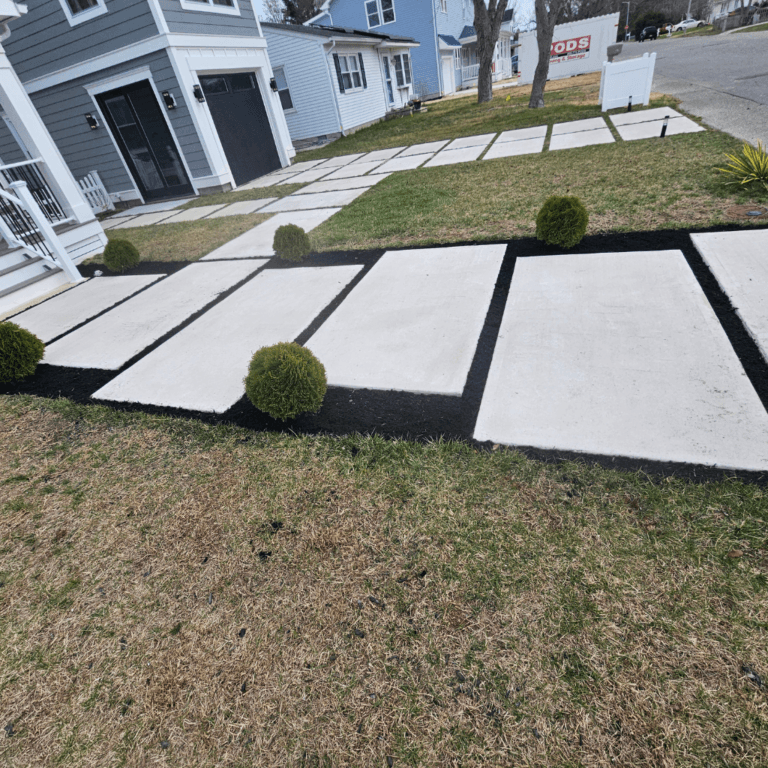
Paver Driveways
Driveways, entrances, and aprons engineered on a heavy, compacted base built for the traffic and turning loads a commercial lot actually sees.
Done right, the surface stays even and tight instead of rutting, cracking, or breaking up at the edges where trucks turn. You can run the pavers in a color and pattern that suits the building, and use a contrasting band to mark lanes or visitor spaces without paint that fades and needs redoing.
When a section ever needs attention, individual pavers lift and reset, so you fix a patch without closing or repaving the whole lot.
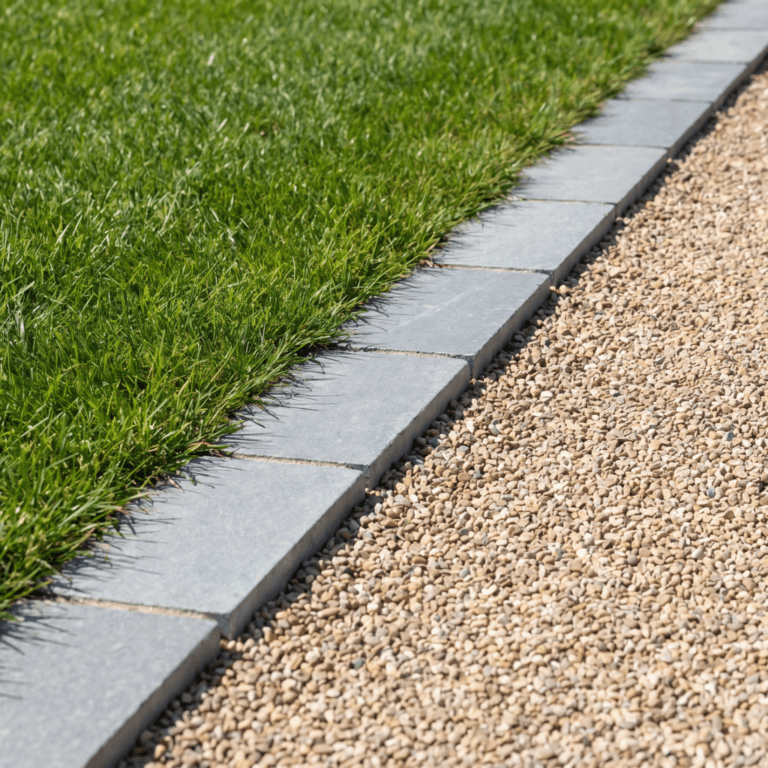
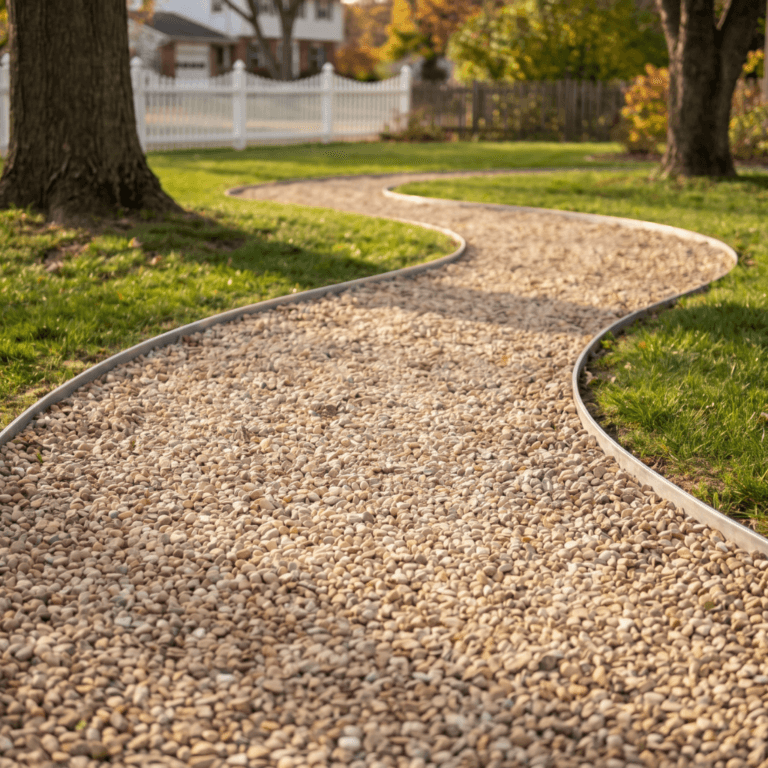
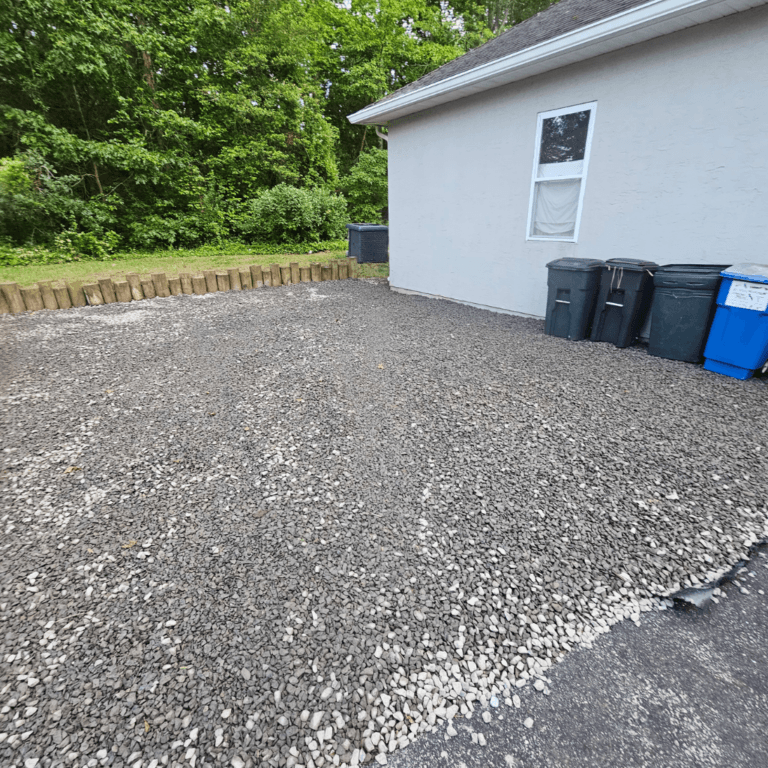
Gravel Driveways
A practical, lower-key surface for service drives, back-of-house access, overflow parking, and more rural commercial lots.
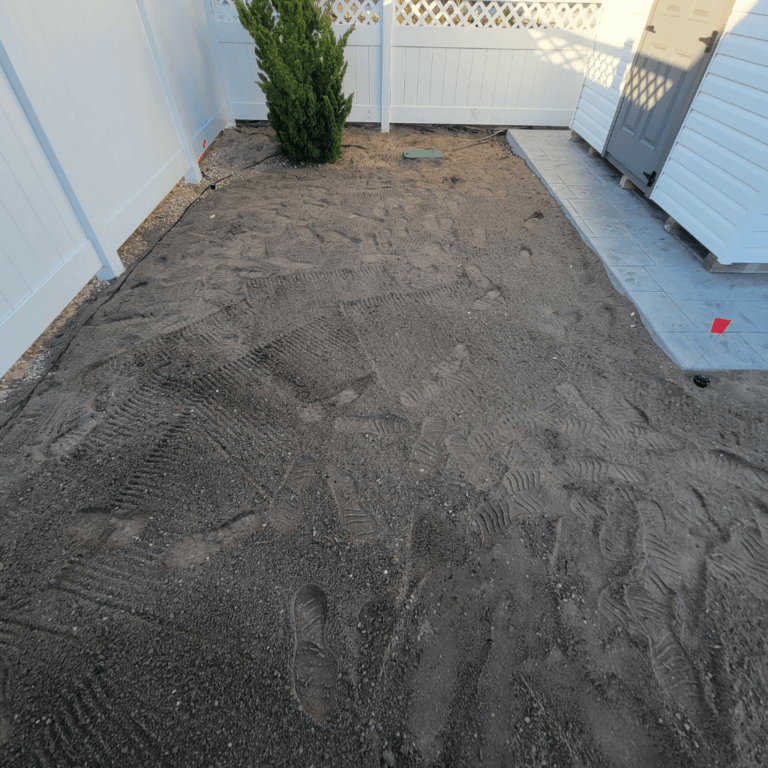
We grade it and lock it with a defined edge so the stone sheds water, stays in its lane, and doesn't track out across the property under steady use.
It also drains down through instead of pooling on top, which suits overflow areas and service drives where standing water would otherwise sit. Topping it up down the road is straightforward, which keeps a working surface looking intentional without much fuss.
Belgian Block Edging
Solid granite block set along the edges of drives, islands, and parking areas, where it does real structural work.
It holds the pavement edge so heavy use and turning don't let the surface spread, crumble, and fail from the outside in, which is where commercial lots usually start to go.
It also stands up to the curb strikes and tire scrubbing a busy lot puts on its edges, where poured concrete curbing chips and asphalt edges break down, so that line stays sharp for years. It draws a crisp, deliberate line that signals a maintained, well-run property from the road.
Decorative Stone
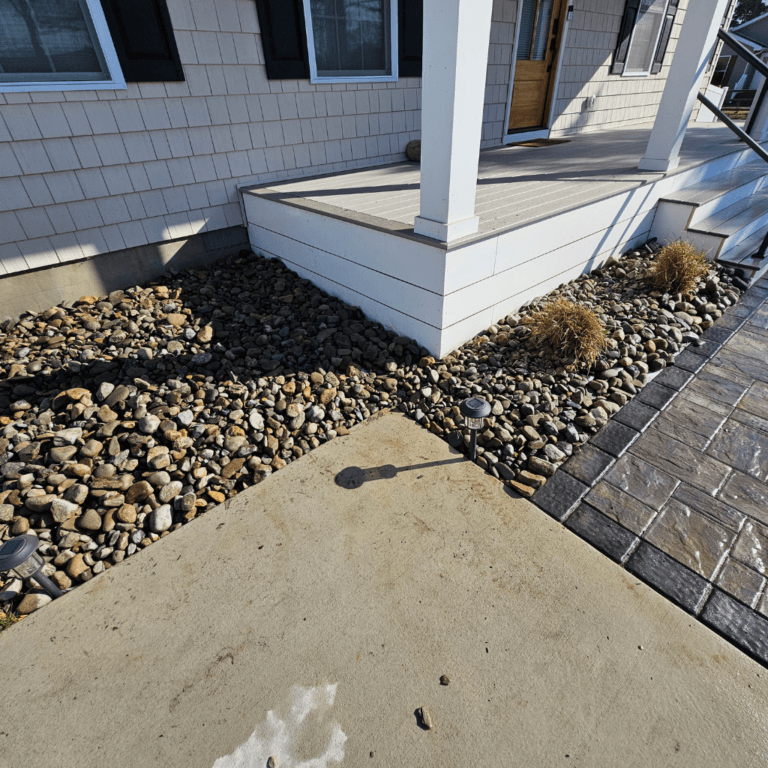
River rock, angular crushed stone, and local Jersey stone for islands, foundation beds, and the drainage areas a commercial site has to manage.
Laid over fabric, it holds its place, moves water where it should go, and keeps weeds down without a crew out there remulching and weeding every season.
On the drainage side it does real work, lining swales and the ground around downspouts to move roof and lot runoff away without the washout or erosion that bare soil and mulch allow. For a property manager, that's one more part of the site that stays clean and presentable on its own.
Why Hardscaping Matters for a Commercial Property
For a business, the entrance and the driveway are the first thing a customer sees, and a cracked, rutted, or patched lot reads as neglect before anyone reaches the door.
A finished, well-kept surface does the opposite, telling customers and tenants the place is run properly. It also takes a real liability off the table: a hardscape built on a proper base stays even and drains instead of holding water, so you’re not managing trip hazards, ponding, or pavement that’s failing at the edges.
For whoever manages the property, that means one less thing on the maintenance list, no annual patching or resurfacing the way a failing surface demands. We build it to carry the traffic it actually sees and keep doing its job for years, and we plan the work around how you run the place so it goes in without shutting you down.